

Law firm SEO strategies are often misunderstood. There’s a dirty secret in the SEO industry: it’s easy to drive traffic to a law firm website. Getting that traffic to turn into clients is the hard part.

Many law firms invest thousands per month in SEO, see their traffic charts rise, and then wonder why the phone isn’t ringing more. The problem isn’t traffic — it’s that the wrong traffic is being attracted, or the site isn’t converting visitors into leads.

This guide focuses on what actually matters: SEO strategies for law firms that generate clients, not just rankings.
Start With Client Intent, Not Just Keywords

The foundation of effective law firm SEO is understanding why people are searching, not just what they’re searching.
There are three main types of search intent relevant to law firms:
Informational intent: The person is researching, not ready to hire yet.
Examples: “what to do after a car accident,” “how does divorce work,” “what is a contingency fee.”
Commercial intent: The person is evaluating options and getting closer to hiring.
Examples: “best personal injury lawyer Dallas,” “top-rated DUI attorney near me,” “how to choose a family law attorney.”
Transactional intent: The person is ready to hire right now.
Examples: “personal injury lawyer near me,” “hire a criminal defense attorney,” “DUI lawyer consultation.”
Transactional and high-commercial-intent searches are where clients come from. Yet many law firm SEO strategies over-invest in informational content (which drives traffic but rarely converts) and under-invest in commercial and transactional pages (which drive leads).
The fix: Map every piece of content on your site to a search intent. Ensure your highest-effort, most optimized pages target commercial and transactional keywords. Use informational content to build authority and drive top-of-funnel awareness, but measure it by traffic — not leads.
Strategy 1: Build a Hub-and-Spoke Content Architecture
One of the most effective SEO strategies for law firms is the hub-and-spoke model:
- Hub page: A comprehensive, authoritative page on your main practice area (e.g., “Personal Injury Law in Texas”)
- Spoke pages: Deeper, specific pages that cover sub-topics (e.g., “Car Accident Lawyer Austin,” “Truck Accident Attorney Texas,” “Slip and Fall Lawyer Dallas”)
The hub page ranks for broad terms and links to the spoke pages. The spoke pages rank for specific, high-intent terms and link back to the hub. Together, they create a content cluster that signals deep topical authority to Google.
For a personal injury firm, this might look like:
Hub: Personal Injury Lawyer [State]
- Car Accident Lawyer [City 1]
- Car Accident Lawyer [City 2]
- Truck Accident Attorney [State]
- Motorcycle Accident Lawyer [City]
- Slip and Fall Attorney [City]
- Wrongful Death Lawyer [State]
- Personal Injury FAQ
Each spoke page is a landing page optimized for its specific keyword, with a clear call to action, and links back to the hub and other relevant pages.
This architecture accomplishes three things simultaneously:
- Targets dozens of specific keywords that together generate significant traffic
- Builds topical authority that helps all pages rank better
- Creates clear conversion funnels for different types of clients
Strategy 2: Optimize for the Exact Moment of Need
Legal searches often occur during times of crisis. Someone involved in a car accident at 10 pm is searching for their phone in a hospital parking lot. A person arrested for DUI is searched from the back of a police car.
These searchers are not browsing — they need help *right now*. Your SEO and conversion strategy needs to be built for them.
What this means in practice:
- Mobile-first, always. Your site needs to load fast and work perfectly on mobile. A one-second delay in mobile load time reduces conversions by up to 20%.
- Click-to-call on every page. A phone number that requires copying isn’t good enough. Large, tap-to-call buttons are visible without scrolling.
- 24/7 availability signal. If you offer emergency consultations or answer after hours, say so prominently. Include it in your Google Business Profile hours.
- Short, clear forms. Don’t ask 10 questions on a contact form. Name, phone, and a brief message is all you need to start a conversation.
- Live chat or chatbot. Many potential clients won’t call but will chat. A live chat widget captures leads who would otherwise leave.
The conversion infrastructure is part of your SEO strategy because Google’s algorithm increasingly measures user behavior signals. If visitors land on your site and immediately leave (high bounce rate), Google interprets that as a quality signal and may lower your rankings.
Strategy 3: Dominate Your Local Market Before Going Broad
Law firms often make the mistake of trying to rank for broad national terms (“best personal injury lawyer”) before establishing strong local rankings. This is backward.
Local SEO is faster, more attainable, and directly tied to clients who can actually hire you. Here’s the sequence:
Step 1: Dominate the local map pack for your primary practice area + city
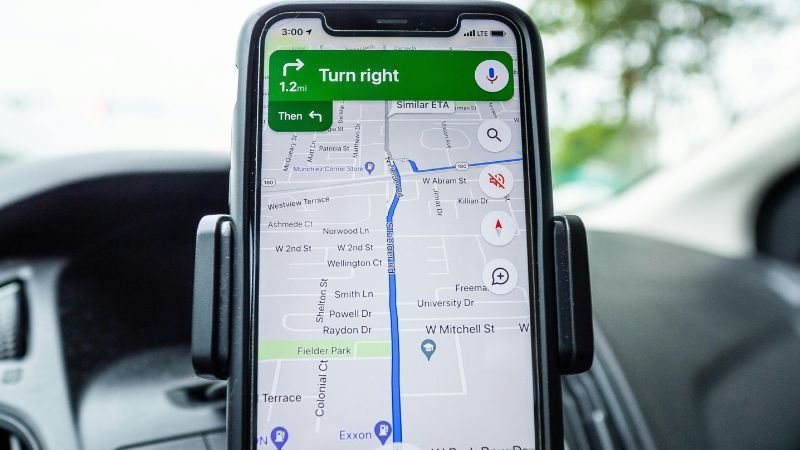
Step 2: Build out local landing pages for the surrounding cities and counties you serve
Step 3: Once the local authority is established, begin targeting broader regional and state-level terms
For most law firms, getting into the top 3 of the Google map pack for “[practice area] lawyer [city]” is worth more in leads than ranking #5 nationally for a high-volume keyword.
The local authority also builds faster. A firm with a strong Google Business Profile, consistent citations, and 50+ reviews can often reach the local map pack in 3–6 months. National organic rankings for competitive terms often take 12–24 months.
Strategy 4: Create Content That Converts, Not Just Content That Ranks
Many law firms publish blog content purely to target informational keywords and attract traffic. There’s nothing wrong with this—but it’s incomplete if those blog posts never lead visitors to become clients.
Every piece of content on your site, including informational blog posts, should have a designed path to conversion:
The conversion sequence for a blog post:
- Reader searches for an informational query (“what to do after a slip and fall accident”)
- They find your blog post and read it
- Mid-article, they encounter a relevant CTA: “Injured in a slip and fall? Get a free case evaluation.”
- A sidebar shows your phone number and a brief contact form
- At the bottom, they see a link to your “Slip and Fall Attorney [City]” service page
- They’re now on your service page, reading about your experience and seeing client testimonials
- They fill out the form or call
Without this designed path, informational content generates traffic that doesn’t convert. With it, even “top of funnel” content contributes to lead generation.
Content types that convert for law firms:
- Free consultation offers with low-friction forms
- Case result pages (where ethically permitted) showing outcomes you’ve achieved
- FAQ pages that answer objections and concerns
- Video introductions from attorneys that build trust
- Client testimonials with specific, relatable situations
Strategy 5: Build Authority Through E-E-A-T
Google’s E-E-A-T framework — Experience, Expertise, Authoritativeness, and Trustworthiness — is particularly important for legal content, which Google classifies as “Your Money or Your Life” (YMYL).
For law firms, E-E-A-T signals include:
Experience:
- Content written by attorneys with real case experience
- Case studies and results that demonstrate hands-on expertise
- Detailed practice area pages that show depth of knowledge
Expertise:
- Detailed attorney bio pages with credentials, bar admissions, education, and awards
- Content that demonstrates deep legal knowledge, not surface-level summaries
- Links to and from respected legal publications and organizations
Authoritativeness:
- Backlinks from bar associations, legal publications, and authoritative websites
- Presence in legal directories (Avvo, Martindale, Super Lawyers)
- Media mentions and press coverage
- Recognition from peer-reviewed legal organizations (Super Lawyers, Best Lawyers ratings)
Trustworthiness:
- Genuine client reviews and testimonials
- Transparent fee information where possible
- Clear attorney profiles with real photos (not stock images)
- Privacy policy, terms of service, and bar number disclosures
- HTTPS and security signals
Agencies that focus purely on keywords without building E-E-A-T signals are building on an unstable foundation. Google increasingly rewards sites that demonstrate genuine expertise and authority.
Strategy 6: Optimize for AI Search (The 2025–2026 Shift)
Google’s AI Overviews, ChatGPT, Gemini, and Perplexity are now answering legal questions directly in search interfaces. This is not the future — it’s the present.
When someone asks ChatGPT, “What should I do if I’m injured in a car accident in Texas?” and ChatGPT recommends a firm to consult, that recommendation is based on online authority signals very similar to traditional SEO.
To appear in AI-generated recommendations:
Write content that directly answers questions.
AI tools prefer content structured as direct Q&A. Lead with the question as a heading (H2 or H3), then answer it concisely and completely in the paragraph immediately below.
Use FAQ schema markup.
Properly structured FAQ schema helps AI tools parse and cite your content. Every practice area page and major blog post should have FAQ schema.
Build genuine authority.
AI models weigh many of the same signals as Google — backlinks, reviews, directory presence, and publication history. A strong traditional SEO foundation also builds AI search visibility.
Get cited in legal publications.
Contributing articles to legal publications (bar journals, legal blogs, practice management publications) creates the kind of authoritative references that AI models draw on.
Keep content fresh and dated.
AI tools — especially those with web access — favor recently updated content. Including publication and update dates, and regularly refreshing key pages, signals currency.
Strategy 7: Track What Actually Matters
The law firms that achieve the best SEO results are those that measure the right things. Avoid the trap of tracking vanity metrics.
Vanity metrics (look good but don’t drive decisions):
- Raw keyword rankings (without volume or traffic context)
- Total page impressions (without clicks)
- Social media follower counts
Meaningful metrics for law firm SEO:
- Organic traffic (monthly trend, and which pages drive it)
- Leads from organic search (phone calls and form submissions attributed to organic traffic)
- Cost per lead from organic vs. paid channels
- Rankings for specific target keywords with known search volume
- Google Business Profile calls and direction requests
- Conversion rate from organic visitors to leads
The gold standard is tracking all the way to signed clients — not just leads. If your intake system tracks where clients heard about you, you can calculate organic SEO’s true ROI.
Strategy 8: The Long Game Is the Only Game
Law firms sometimes abandon SEO after 3–4 months because they aren’t seeing results. This is one of the most common and most expensive mistakes in legal marketing.
SEO is a compounding investment. The content you create in month 1 may not rank meaningfully until month 6. The links you build in month 3 strengthen a page that ranks in month 10. The authority you build by publishing consistently for 12 months makes every new piece of content rank faster.
Firms that commit to 18–24 months of consistent SEO investment typically see:
- Organic traffic that exceeds their paid traffic volume
- Lead costs significantly lower than any other channel
- A self-reinforcing authority that makes new rankings easier to achieve
- A competitive moat that takes competitors years to close
The law firms that dominate Google in your market today started their SEO years ago. The firms that will dominate in 2–3 years are starting today.
Getting Your Strategy Right from the Start
The difference between law firm SEO that generates clients and SEO that just generates reports is strategy — knowing which keywords to target, how to structure your content, how to convert visitors, and how to build authority that lasts.
If you’re ready to build a law firm SEO strategy designed for real business outcomes, let’s talk. We’ll assess your market, your competition, and your current position, and build a roadmap to the results you’re looking for.
LawGetSEO specializes exclusively in SEO for law firms. We work with one client per market — so your strategy is built entirely in your favor. Learn more