

If you’ve ever Googled your own law firm and found yourself buried on page three, you already understand the problem that SEO is designed to solve.

SEO for law firms involves optimizing your website, content, and online presence to rank higher on search engines.
Search Engine Optimization — SEO — is the process of making your law firm’s website more visible in search engines like Google when potential clients search for attorneys in your practice area. It’s the difference between a client finding you or finding your competitor.
But SEO for lawyers isn’t generic SEO. The legal industry has unique rules, unique search behavior, and uniquely high stakes. In this guide, we break down exactly what law firm SEO means, what it involves, and what results you should realistically expect.
What Is SEO for Lawyers, Exactly?
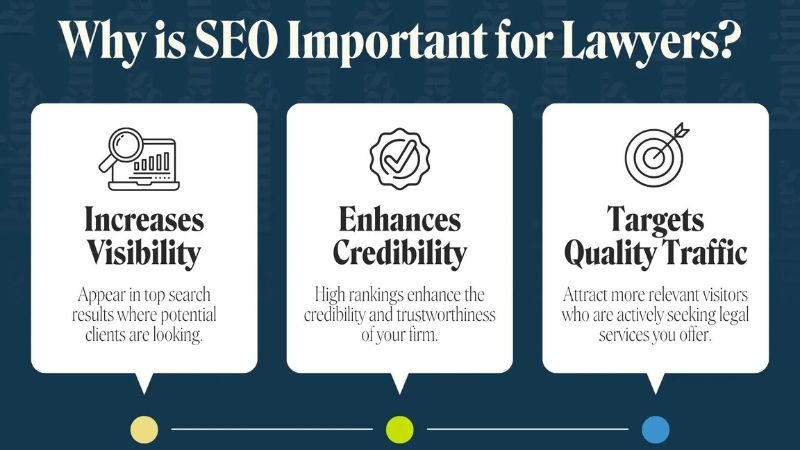
SEO for lawyers is the practice of optimizing a law firm’s online presence to rank higher in search engine results pages (SERPs) when people search for legal services.
When someone types “personal injury lawyer near me” or “criminal defense attorney Houston” into Google, Google returns a list of results. The firms that appear at the top of that list capture the overwhelming majority of clicks — and therefore clients.
SEO is how your firm gets to the top.
If you’re looking for professional support, explore our legal SEO services for law firms.
It involves a combination of:
- On-page optimization — improving the content and structure of your website pages
- Technical SEO — ensuring your site loads fast, is mobile-friendly, and is easy for search engines to crawl
- Local SEO — making sure you appear in Google Maps and local search results
- Content marketing — publishing helpful legal content that attracts and educates potential clients
- Link building — earning references from reputable websites that signal authority to Google
- AI search optimization — ensuring your firm appears in AI-generated answers from tools like ChatGPT, Gemini, and Google’s AI Overviews.
Why Does SEO Matter for Law Firms?

Consider this: over 96% of people seeking legal advice start their search online. The majority of those searches happen on Google. And the top three organic results capture more than 50% of all clicks on a search results page.
If your firm isn’t on page one, you are functionally invisible to most potential clients.
Law firm SEO matters because:
-
High-intent clients are searching right now
Someone Googling “DUI lawyer near me at 11 pm” is in crisis mode. They need help immediately. If your firm appears first, you get the call.
-
Organic traffic compounds over time
Unlike paid ads, which stop the moment your budget runs out, SEO results accumulate. A well-optimized page can generate leads for years without additional spend.
-
The competition is fierce, and investing in SEO is key
Legal is one of the most competitive industries in Google search. Your competitors are spending thousands per month on SEO. Not investing means losing ground.
-
Trust starts with search rankings
Clients associate top search rankings with credibility. Appearing first for “best personal injury lawyer in [city]” carries an implicit endorsement from Google itself.
What Does SEO for Lawyers Actually Include?
-
Keyword Research
Everything starts with understanding what your potential clients are typing into Google. For law firms, this means identifying:
-
- Practice area keywords (“personal injury lawyer,” “criminal defense attorney”)
-
- Location-specific keywords (“family law attorney Denver,” “DUI lawyer in Phoenix”)
-
- Question-based keywords (“how do I find a good divorce lawyer,” “what does a personal injury lawyer do”)
-
- Comparison keywords (“best personal injury lawyer,” “top-rated criminal defense attorney”)
The right keywords are specific enough that you can realistically rank for them, but are searched frequently enough to generate meaningful traffic.
-
-
On-Page Optimization
-
Once you know your keywords, every page of your website needs to be optimized to signal relevance to Google. This means:
-
- Writing keyword-rich page titles and meta descriptions
-
- Using your target keyword in headings (H1, H2, H3)
-
- Including keywords naturally throughout the page content
-
- Optimizing images with descriptive alt text
-
- Adding internal links between related pages
-
-
Technical SEO
-
Google prioritizes websites that provide a good user experience. Technical SEO ensures your site meets Google’s technical requirements:
-
- Fast page load speed (under 2.5 seconds)
-
- Mobile-friendly design (most legal searches happen on phones)
-
- Secure HTTPS connection
-
- Clean site architecture that Google can crawl easily
-
- Structured data markup (schema) that helps Google understand your content
-
-
Local SEO
-
For most law firms, local SEO is the single most important component. When someone searches “lawyer near me” or “attorney in [city],” Google shows a map pack — a set of local business listings — before the organic results.
Getting into the map pack requires:
-
- A fully optimized Google Business Profile
-
- Consistent NAP (name, address, phone) information across all directories
-
- Local citations in legal directories (Avvo, FindLaw, Justia, Martindale)
-
- Reviews from clients
-
-
Content Marketing
-
Google rewards websites that demonstrate expertise, authority, and trustworthiness — what it calls E-E-A-T (Experience, Expertise, Authoritativeness, Trustworthiness). For law firms, this means publishing:
-
- Practice area pages that thoroughly explain your services
-
- Blog posts answering common client questions
-
- FAQ pages covering what clients want to know before hiring a lawyer
-
- Case results and testimonials (where ethically permitted)
-
-
Link Building
-
Backlinks — links from other websites to yours — are one of Google’s strongest ranking signals. For law firms, this means earning links from:
-
- Legal directories and bar association websites
-
- Legal news publications and blogs
-
- Local business directories and chambers of commerce
-
- Press coverage of notable cases or firm news
-
-
AI Search Optimization (New in 2025–2026)
-
Google’s AI Overviews, ChatGPT, Gemini, and Perplexity are now answering legal questions directly in search results. Appearing in these AI-generated answers requires:
-
- Structured, authoritative content that directly answers questions
-
- Schema markup that helps AI tools understand and cite your content
-
- A strong reputation and backlink profile that signals authority to AI models.
How Long Does SEO Take for Law Firms?
This is the question every lawyer asks. The honest answer: it depends on how competitive your market is and how aggressively you invest.
General timelines:
-
- 0–3 months: Technical improvements and on-page optimization take effect; local SEO starts improving map pack visibility
-
- 3–6 months: New content pages begin ranking; organic traffic starts increasing
-
- 6–12 months: Significant ranking improvements for competitive practice area keywords
-
- 12+ months: Established authority; consistent top-3 rankings for primary keywords
Law firm SEO is not a shortcut. Agencies that promise first-page rankings in 30 days are overpromising. But firms that invest consistently in SEO for 12–24 months typically see transformational results in organic lead volume.
What Results Should You Expect?
Realistic benchmarks for a law firm that invests in SEO for 12 months:
-
- Organic traffic: 3–10x increase in website visitors from search
-
- Rankings: Top-5 positions for primary practice area + city keywords
-
- Map pack: Consistent appearance in Google’s local 3-pack for key searches
-
- Leads: 20–50+ new organic inquiries per month (varies widely by market size)
-
- AI visibility: Regular citation in Google AI Overviews and ChatGPT responses for relevant legal questions
SEO vs. Paid Ads for Lawyers: What’s the Difference?
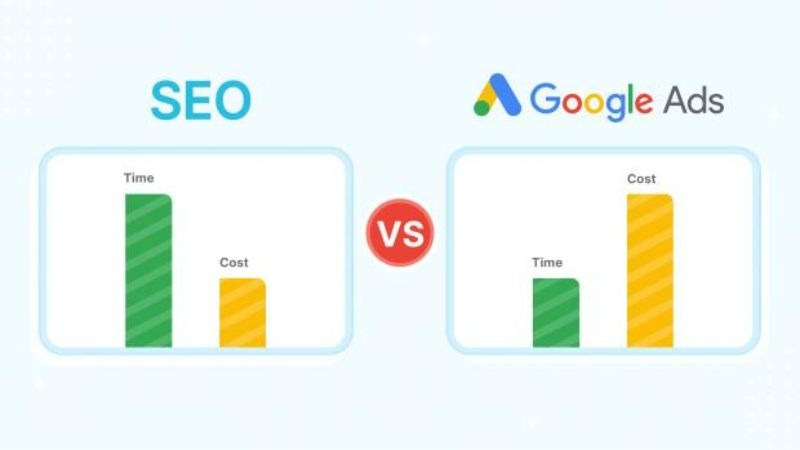
Many law firms use Google Ads (PPC) alongside SEO. Here’s how they differ:
| SEO | Google Ads |
| Timeline | 6–12 months to see results vs Immediate results |
| Cost | Monthly retainer for ongoing SEO work vs Pay per click ($50–$200+ per click for legal) |
| Longevity | Results compound and last long-term vs Stops when budget stops |
| Trust | Organic results are seen as more credible vs Labeled as “Sponsored” |
| Best for | Long-term client acquisition vs Immediate lead generation |
Most competitive law firms invest in both. SEO builds long-term authority; ads fill the pipeline while SEO builds.
Common Misconceptions About Law Firm SEO
“SEO is a one-time fix.”
No. SEO is ongoing. Google’s algorithm updates constantly, competitors keep optimizing, and new content needs to be published regularly. Law firms that stop SEO quickly lose ground.
“Having a nice website is enough.”
A beautiful website that isn’t optimized will never rank. Design and SEO are separate disciplines.
“Keywords are all that matters.”
Keywords matter, but Google now evaluates dozens of factors: site speed, mobile experience, content depth, backlinks, local signals, and user behavior. Keyword-stuffing without a holistic strategy doesn’t work.
“Any SEO agency can handle law firm SEO.”
Legal SEO requires an understanding of the legal industry, attorney advertising rules, ethical obligations, and the specific search behavior of people seeking legal help. A generalist agency that also handles plumbers and restaurants will not deliver the same results as a legal SEO specialist.
Why Legal-Specific SEO Expertise Matters
Law firms operate under state bar rules that govern how they can advertise and market themselves online. SEO content for lawyers must:
- Avoid making guarantees about case outcomes
- Comply with attorney advertising disclosure rules
- Present credentials and experience accurately
- Maintain a professional tone appropriate to the legal profession
A legal SEO specialist understands these constraints and builds strategies within them. A generalist agency may inadvertently produce content that raises ethical or regulatory concerns.
Getting Started with Law Firm SEO
If you’re new to SEO, here’s where to start:
Audit your current site — understand what’s working and what’s not
Claim and optimize your Google Business Profile — this is free and has an immediate impact
Identify your top 5–10 keywords — what practice areas and locations matter most?
Create or optimize your practice area pages — one page per key practice area, optimized for search.
Start publishing content — answer the questions your clients are already asking.
Build your local presence — get listed in legal directories with consistent information.n
Track everything — use Google Search Console and Google Analytics to measure progress.
Conclusion
SEO for lawyers is no longer optional. In a market where the majority of clients start their search online, the firms that invest in search visibility win more clients, build stronger brands, and grow faster.
It’s not a quick fix, and it’s not cheap — but done right, law firm SEO is the highest-ROI marketing investment most firms can make.
If you’re ready to see what a proper law firm SEO strategy looks like for your practice, schedule a free consultation with LawGetSEO today.
